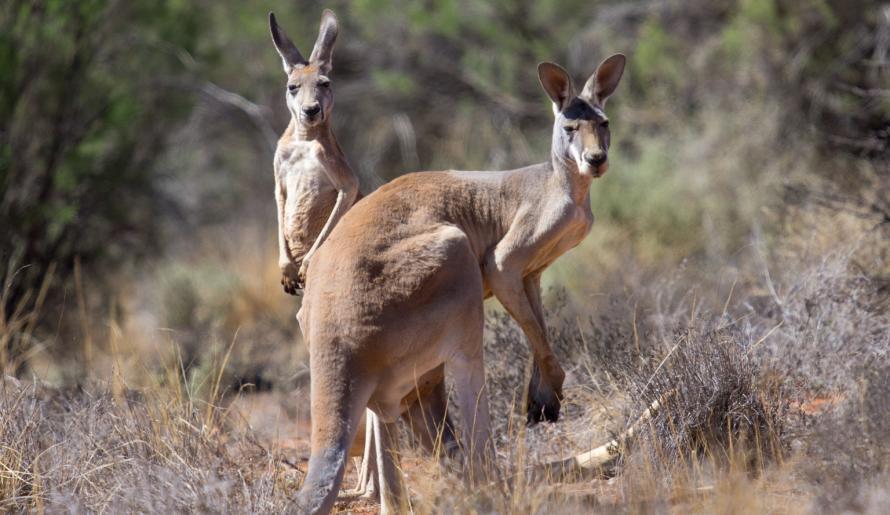
Protect your pastures, crops, and infrastructure with targeted, humane kangaroo‑management solutions. We assess grazing pressure, identify movement patterns, and implement compliant control strategies that reduce damage while supporting long‑term land health. Our approach helps landholders restore pasture productivity, protect fencing, and maintain a balanced ecosystem across rural NSW.
Effective kangaroo management requires a regulated, humane and site‑specific approach, undertaken only where authorised. Management programs are designed to address over‑abundance impacts while ensuring animal welfare standards are met and native wildlife is treated ethically and responsibly.
Licensed and authorized operators may undertake kangaroo management activities that include:
All activities are conducted only where lawful, with strict regard for safety, species protection and animal welfare outcome requirements.
✅ Structured Pest Management Plans
✅ Thermal-Assisted Detection
✅ GPS-Mapped Reporting
✅ Licensed & Insured
✅ Compliance Documentation
✅ Coordinated Multi-Property Programs
✅ Central West NSW Coverage
We operate under NSW legislation and follow NPWS guidance; $20M public liability
Understanding kangaroo activity is the first step in effective management. We help landholders identify clear indicators such as grazing pressure, pad runs, scats, fence damage, and water‑point congregation. Early detection allows for timely, compliant action that prevents long‑term property impacts
Kangaroos leave very distinctive tracks, scats, grazing patterns, pads, and fence damage. Their signs are usually easy to identify due to their size and movement style.
Kangaroo tracks are unique and easy to recognize.
Tracks are commonly found:
Kangaroo scats are very distinctive.
Characteristics:
Often found:
Kangaroos graze heavily and can compete with livestock.
Signs include:
Kangaroos prefer:
Kangaroos create well‑defined movement paths.
Features:
These pads can become very obvious in dry periods.
Kangaroos rest in shaded or sheltered areas during the day.
Signs include:
Large mobs create multiple resting spots.
Kangaroos frequently damage fences when crossing.
Indicators:
Damage is often repeated at the same crossing points.
Kangaroos are often seen:
Fresh sightings combined with tracks and scats confirm active use of the area.
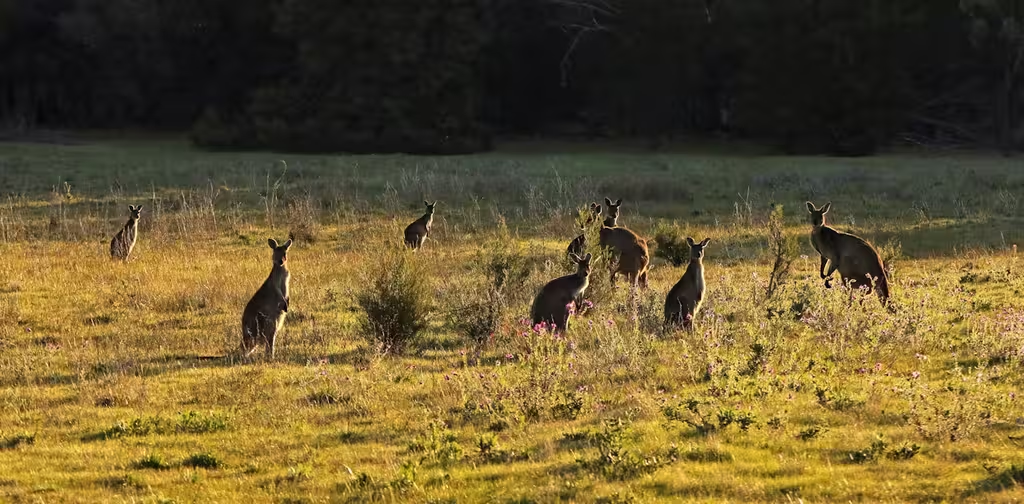
Professional kangaroo control delivers measurable improvements to pasture recovery, stock performance, and property resilience. By reducing grazing pressure and preventing overpopulation, we help landholders maintain sustainable carrying capacity and protect valuable feed resources year‑round
Kangaroos are a protected native species in New South Wales, however in some rural and agricultural settings their populations can place significant pressure on pasture, fencing, water infrastructure and land condition. When kangaroo numbers exceed the carrying capacity of the land, overgrazing can contribute to pasture loss, soil erosion, reduced ground cover and competition with livestock, particularly during drought and dry seasonal conditions.
In these circumstances, lawful kangaroo management plays an important role in balancing animal welfare, agricultural productivity and environmental sustainability.
Under NSW legislation, kangaroos cannot be controlled without approval. Landholders must operate under an appropriate licence, permit or authority, such as an Authority to Control Wildlife (ATCW) or an approved commercial harvest arrangement. Any management activity must comply strictly with animal welfare requirements and approved operating conditions.
Where authorized, professional kangaroo management can assist landholders to:
Across New South Wales, kangaroo management is increasingly recognized as a regulated land management tool, not a pest control activity. Each situation must be assessed individually, with management decisions based on environmental conditions, stocking rates, seasonal pressures and regulatory constraints.
By utilizing authorized, professional and ethically guided services, landholders can address over‑abundance impacts responsibly while meeting their legal obligations and supporting long‑term land health.